


Skip to content
ForEveryone logo
  • Workshops
  • Courses
    • Clay Connection
  • EU Projects
    • What We Do
    • Toolbox For Integration
    • Peer Support & Resilience
    • SheLeads
  • Community
    • About Us
    • Partnerships
    • Events
    • Volunteer
    • Contact
    • Instagram
  • Cafe
  • Blog
  • Book a Workshop
  • Workshops
  • Courses
    • Clay Connection
  • EU Projects
    • What We Do
    • Toolbox For Integration
    • Peer Support & Resilience
    • SheLeads
  • Community
    • About Us
    • Partnerships
    • Events
    • Volunteer
    • Contact
    • Instagram
  • Cafe
  • Blog
  • Book a Workshop
ForEveryone logo
  • Workshops
  • Courses
    • Clay Connection
  • EU Projects
    • What We Do
    • Toolbox For Integration
    • Peer Support & Resilience
    • SheLeads
  • Community
    • About Us
    • Partnerships
    • Events
    • Volunteer
    • Contact
    • Instagram
  • Cafe
  • Blog
  • Book a Workshop
  • Workshops
  • Courses
    • Clay Connection
  • EU Projects
    • What We Do
    • Toolbox For Integration
    • Peer Support & Resilience
    • SheLeads
  • Community
    • About Us
    • Partnerships
    • Events
    • Volunteer
    • Contact
    • Instagram
  • Cafe
  • Blog
  • Book a Workshop
Book a Workshop
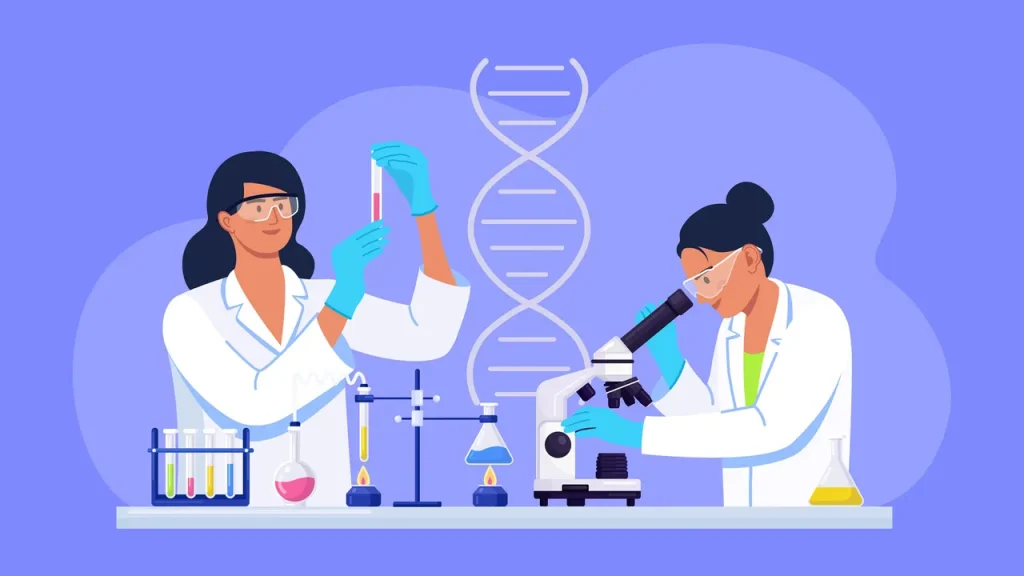
An illustration of two female scientists working in a laboratory beside a DNA helix

Women in Science: Progress, Challenges and the Road Ahead

This article pays tribute to the history, achievements, challenges and future prospects for women in science

Picture of Maria Plexida

Maria Plexida

  • February 11, 2025

Women have been contributing to science for centuries now, but their efforts are often underappreciated or overlooked.


Despite the many advances made so far, significant gender disparities continue to persist in most scientific fields.


This article pays tribute to the International Day of Women and Girls in Science (11th of February), by looking into the history, achievements, challenges and future prospects for women in science.

Historical contributions

Women have been present in many scientific fields throughout history. From mathematics, astronomy and philosophy, to winning Nobel Prizes. Below, we will take a look at four of them:

Hypatia (4th Century AD)


From Little Journeys to the Homes of Great Teachers: Hypatia, by Elbert Hubbard, 1908

Hypatia was an astronomer, philosopher and mathematician, who lived in Alexandria in Egypt. As the head of the Neoplatonist school in Alexandria, she taught mathematics, astronomy and philosophy, attracting students from all over the Mediterranean.


Hypatia was murdered in 415 AD by a Christian mob, who viewed her as a threat due to her pagan beliefs and association with Roman officials.


Marie Curie (1867–1934)


The Granger Collection, New York

Maria Salomea Skłodowska-Curie was a Polish physicist and chemist and the first woman to win a Nobel Prize.


Her contribution on radioactivity was noteworthy, as she helped develop radiation therapy for cancer treatment. She was also the first female professor at the Sorbonne, but she faced challenges being denied membership in the French Academy of Sciences.


Rosalind Franklin (1920–1958)


© Donaldson Collection—Michael Ochs Archives/Getty Images

Rosalind Franklin was a British chemist and X-Ray crystallographer. She is best known for her contributions to the discovery of the molecular structure of deoxyribonucleic acid (DNA).


Despite her work and contributions, she was greatly overlooked, with credit going to James Watson, Francis Crick and Maurice Wilkins, who received the Nobel Prize in 1962 for the discovery of DNA’s double helix.


Katherine Johnson (1918–2020)


NASA

Katherine Johnson was an mathematician who, for more than three decades in the U.S. space program, calculated and analysed flight paths of many spacecraft. She helped determine the flight path for the first moon landing.


Katherine’s father, Joshua Coleman, encouraged her potential, driving 120 miles to ensure she could complete high school. She thrived, skipping grades, graduating at 14 and completing her college degree by 18.

Current status and challenges

Despite the improvements, the gender gap still exists in the fields of science, technology, engineering, and mathematics (S.T.E.M.). Although more women are joining these fields, they encounter many systemic barriers that delay their advancement.


1. Underrepresentation in leadership roles


Women earn a large percentage of science degrees, but they are under-represented in roles as professors, department heads and corporate officers.


Why it matters:

  • Fewer women remain in the profession due to discrimination, a lack of opportunity or workplace culture.
  • Female scientists who achieve leadership positions are frequently pushed to higher standards or criticized harsher than their male counterparts.

In 2023, women made up only 28% of university professors in S.T.E.M. fields, although accounting for nearly 50% of PhD grads in certain specialties.


2. Gender Pay Gap


Women in S.T.E.M., while qualified and experienced as their male counterparts, receive considerably less compensation.


Why It Matters:

  • Pay gaps discourage women from continuing in S.T.E.M., especially in academia, where the pay is lower compared to jobs in industry.
  • Throughout the lifetime, the gap in pay affects women’s accumulated wealth, choices and even retirement security.
  • The gap in these fields could be even more critical in areas where the demand for certain professionals is huge, like in engineering and technology.

Example: It has been recorded that women scientists earn 17-20 percent less than male scientists for the same position.

3. Lack of Female Role Models and Mentors


With fewer women in leadership, young women in the fields of science, technology, engineering and math often lack mentors who might advise them through the ups and downs of a scientific career.


Why It Matters:

  • Role models provide inspiration-when women see successful female scientists, they are more likely to envision themselves in similar roles.
  • Women mentors can help overcome problems, such as facing bias or negotiating salaries.
  • Lack of women in senior positions creates a vicious circle: in the absence of mentoring, fewer women remain in the field and therefore reduce the pool of future mentors.

Example: In certain areas of S.T.E.M., less than 10% of the senior faculty members are women, therefore often leaving a young female scientist without an example to look up to.


Progress and initiatives

Many organisations and programs work towards the advancement of women in science, including:


  • UNESCO and UN Women’s initiatives: Encouragement of girls’ S.T.E.M. education across the world.
  • Athena SWAN Charter (UK): Advancement of gender equality in higher education and research.
  • Women in Science Awards: Recognizing female scientists’ achievements.
  • Visibility and recognition through #WomenInSTEM social media movements.

More universities and companies now have policies of parental leave, mentorship programs and hiring practices that incorporate more gender inclusion.

The road ahead

1. STEM Education for girls


Encourage the girls from a young age to take an interest in science. Schools should offer STEM programs, providing mentorship opportunities to break stereotypes that S.T.E.M. is a male dominated world.


2. Women in Leadership


More women in positions of leadership inspire younger generations. Universities and research institutions can actively support career advancement through mentoring, leadership development and gender diversity policies to encourage more women in senior positions.


3. End Bias and Discrimination


There is unconscious bias in hiring and promotion decisions, as well as in research funding. Bias-awareness training and transparent hiring and promotion processes that hold individuals accountable can create a more level playing field.


4. Inspire Male Allyship


Men in the sciences can play an important role in supporting gender equity. This can manifest in the way they mentor, support equal pay or show bias when witnessing it. Changing workplace culture in this regard has much to do with solidarity.

To summarise

Women have been contributing and putting their effort and knowledge in science despite systemic challenges. Though the situation has indeed improved, actual equality is still many miles away.


The full potential of women in science will be tapped when the scientific community works actively to create an enabling and supportive environment, including mentorship programs, equal opportunities for funding, hiring practices that are blind to gender and workplace policies that enable work-life balance.


This calls for all people to advocate for systemic change from the very beginning, so that girls see strong and powerful role models and feel empowered to pursue a career in S.T.E.M.


By tearing down barriers, we can aspire to the dream of a world where women’s contributions to science are not only recognized but fully embraced and celebrated. The future of science is dependent on the talent, firmness of will and brilliance of all individuals, despite their gender.


Empowering women in S.T.E.M. today, allows the construction of a stronger, more innovative scientific future for future generations.

Picture of Maria Plexida

Maria Plexida

Maria Plexida is from Greece and currently exploring the city of Berlin in her own way. She studied Journalism and love telling stories, either through text or visuals. She also plays the piano and sings. Still unsure of what she’ll choose. As for now, she is a blog writer and editor at ForEveryone :)
DJ performing from a music truck during the Rave the Planet Berlin 2026 parade in Berlin.
Berlin
Nadja Prytkova

Rave the Planet 2026 Guide: History, Route, Tips & What to Expect

Rave the Planet 2026 Guide: History, Route, Tips & What to Expect Planning to join Rave the Planet Berlin 2026? This guide covers everything you need to know before the

Read More »
Nadja Prytkova 5 August, 2026
ForEvyone Team outside Café Pavillon, a wooden kiosk café at Boxhagener Platz, with trees and a cobblestone street around them
Balance and Wellbeing
Meryame Benmokhchane

Why Meaningful Connections Take More Than Just Spending Time Together

Making meaningful friendships takes more than simply spending time together. In this article, we’ll explore the science behind human connection, why shared experiences matter, and how building community helps create a lasting sense of belonging whether you’re new to Berlin or simply looking to connect.

Read More »
Meryame Benmokhchane 9 July, 2026
Handbuilt pottery pieces created during a beginner pottery workshop at ForEveryone Berlin.
Arts and Crafts
Nadja Prytkova

Berlin Pottery Workshops in English: Affordable Classes for Beginners

Looking for an affordable ceramic workshop Berlin for beginners? Discover English-speaking pottery workshops, compare studios and prices, and find pottery classes in Berlin for expats who want to get creative, meet people, and learn pottery in a welcoming environment.

Read More »
Nadja Prytkova 30 June, 2026

Women in Science: Progress, Challenges and the Road Ahead

Women in Science: Progress, Challenges and the Road Ahead

11.02.25 – Maria Plexida

Women have been contributing to science for centuries now, but their efforts are often underappreciated or overlooked. Despite the many advances made so far, significant gender disparities continue to persist in most scientific fields. This article pays tribute to the International Day of Women and Girls in Science (11th of February), by looking into the history, achievements, challenges and future prospects for women in science.

Historical contributions

Women have been present in many scientific fields throughout history. From mathematics, astronomy and philosophy, to winning Nobel Prizes. Below, we will take a look at four of them:

Hypatia (4th century AD)

From Little Journeys to the Homes of Great Teachers: Hypatia, by Elbert Hubbard, 1908

Hypatia was an astronomer, philosopher and mathematician, who lived in Alexandria in Egypt. As the head of the Neoplatonist school in Alexandria, she taught mathematics, astronomy and philosophy, attracting students from all over the Mediterranean.

Hypatia was murdered in 415 AD by a Christian mob, who viewed her as a threat due to her pagan beliefs and association with Roman officials.

Marie Curie (1867–1934)
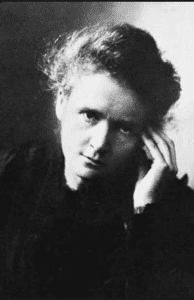
The Granger Collection, New York

Maria Salomea Skłodowska-Curie was a Polish physicist and chemist and the first woman to win a Nobel Prize. Her contribution on radioactivity was noteworthy, as she helped develop radiation therapy for cancer treatment. She was also the first female professor at the Sorbonne, but she faced challenges being denied membership in the French Academy of Sciences.

Rosalind Franklin (1920–1958)

© Donaldson Collection—Michael Ochs Archives/Getty Images

Rosalind Franklin was a British chemist and X-Ray crystallographer. She is best known for her contributions to the discovery of the molecular structure of deoxyribonucleic acid (DNA). Despite her work and contributions, she was greatly overlooked, with credit going to James Watson, Francis Crick and Maurice Wilkins, who received the Nobel Prize in 1962 for the discovery of DNA’s double helix.

Katherine Johnson (1918–2020)
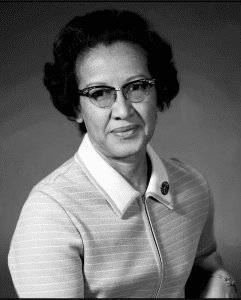
NASA

Katherine Johnson was an American mathematician who, for more than three decades in the U.S. space program, calculated and analyzed flight paths of many spacecraft. She helped determine the flight path for the first moon landing. Katherine’s father, Joshua Coleman, aided to encourage her potential, driving 120 miles to ensure she could complete high school. She thrived, skipping grades, graduating at 14 and completing her college degree by 18.

Current Status and Challenges

Despite the improvements, the gender gap still exists in the fields of science, technology, engineering, and mathematics (S.T.E.M.). Although more women are joining these fields, they encounter many systemic barriers that delay their advancement.

1. Underrepresentation in Leadership Roles

Women earn a large percentage of science degrees, but they are under-represented in roles as professors, department heads and corporate officers.

Why it Matters:

  • As womens’ careers grow, fewer women remain in the profession due to discrimination, a lack of opportunity or workplace culture.
  • Female scientists who achieve leadership positions are frequently pushed to higher standards or criticized harsher than their male counterparts.

In 2023, women made up only 28% of university professors in S.T.E.M. fields, although accounting for nearly 50% of PhD grads in certain specialties.

2. Gender Pay Gap

Women in S.T.E.M., while qualified and experienced as their male counterparts, receive considerably less compensation.

Why It Matters:

  • Pay gaps discourage women from continuing in S.T.E.M., especially in academia, where the pay is lower compared to jobs in industry.
  • Throughout the lifetime, the gap in pay affects women’s accumulated wealth, choices and even retirement security.
  • The gap in these fields could be even more critical in areas where the demand for certain professionals is huge, like in engineering and technology.

Example: It has been recorded that women scientists earn 17-20 percent less than male scientists for the same position.

3. Lack of Female Role Models and Mentors

With fewer women in leadership, young women in the fields of science, technology, engineering and math often lack mentors who might advise them through the ups and downs of a scientific career.

Why It Matters:

  • Role models provide inspiration-when women see successful female scientists, they are more likely to envision themselves in similar roles.
  • Women mentors can help overcome problems, such as facing bias or negotiating salaries.
  • Lack of women in senior positions creates a vicious circle: in the absence of mentoring, fewer women remain in the field and therefore reduce the pool of future mentors.

Example: In certain areas of S.T.E.M., less than 10% of the senior faculty members are women, therefore often leaving a young female scientist without an example to look up to.

Progress and Initiatives
Source: iStock

Many organizations and programs work towards the advancement of women in science, including:

  • UNESCO and UN Women’s initiatives: Encouragement of girls’ S.T.E.M. education across the world.
  • Athena SWAN Charter (UK): Advancement of gender equality in higher education and research.
  • Women in Science Awards: Recognizing female scientists’ achievements.
  • Visibility and recognition through #WomenInSTEM social media movements.

More universities and companies now have policies of parental leave, mentorship programs and hiring practices that incorporate more gender inclusion.

The road ahead

1. STEM Education for girls

Encourage the girls from a young age to take an interest in science. Schools should offer STEM programs, providing mentorship opportunities to break stereotypes that S.T.E.M. is a male dominated world.

2. Women in Leadership

More women in positions of leadership inspire younger generations. Universities and research institutions can actively support career advancement through mentoring, leadership development and gender diversity policies to encourage more women in senior positions.

3. End Bias and Discrimination

There is unconscious bias in hiring and promotion decisions, as well as in research funding. Bias-awareness training and transparent hiring and promotion processes that hold individuals accountable can create a more level playing field.

4. Inspire Male Allyship

Men in the sciences can play an important role in supporting gender equity. This can manifest in the way they mentor, support equal pay or show bias when witnessing it. Changing workplace culture in this regard has much to do with solidarity.

To summarise

Women have been contributing and putting their effort and knowledge in science despite systemic challenges. Though the situation has indeed improved, actual equality is still many miles away. The full potential of women in science will be tapped when the scientific community works actively to create an enabling and supportive environment, including mentorship programs, equal opportunities for funding, hiring practices that are blind to gender and workplace policies that enable work-life balance.

This calls for women and men to advocate for systemic change from the very beginning, so that girls see strong and powerful role models and feel empowered to pursue a career in S.T.E.M.

By tearing down barriers, we can aspire to the dream of a world where women’s contributions to science are not only recognized but fully embraced and celebrated. The future of science is dependent on the talent, firmness of will and brilliance of all individuals, despite their gender. Empowering women in S.T.E.M. today, allows the construction of a stronger, more innovative scientific future for future generations.

Let’s make this world better together! 🙂

Subscribe to

Our Newsletter:

loader

ForEveryone logo
ForEveryone logo

Not your average newsletter: heartfelt, human, happy

Explore

  • Workshops
  • Courses
  • EU Projects
  • About Us

Support

  • Volunteer
  • Partner With Us
  • Cafe
  • Blog

Contact

  • Contacts
  • hello@foreveryone.berlin
  • No.52 Cafe, Grünberger Str. / Ecke, Gärtnerstraße, 10245 Berlin

Not your average newsletter: heartfelt, human, happy

© 2026 ForEveryone. All rights reserved.      Privacy       Impressum

© 2026 ForEveryone. All rights reserved.      Privacy      Impressum
We use cookies

We use cookies to enhance your experience and analyze traffic, as explained in the Cookie Policy.

Functional Always active
The technical storage or access is strictly necessary for the legitimate purpose of enabling the use of a specific service explicitly requested by the subscriber or user, or for the sole purpose of carrying out the transmission of a communication over an electronic communications network.
Preferences
The technical storage or access is necessary for the legitimate purpose of storing preferences that are not requested by the subscriber or user.
Statistics
The technical storage or access that is used exclusively for statistical purposes. The technical storage or access that is used exclusively for anonymous statistical purposes. Without a subpoena, voluntary compliance on the part of your Internet Service Provider, or additional records from a third party, information stored or retrieved for this purpose alone cannot usually be used to identify you.
Marketing
The technical storage or access is required to create user profiles to send advertising, or to track the user on a website or across several websites for similar marketing purposes.
  • Manage options
  • Manage services
  • Manage {vendor_count} vendors
  • Read more about these purposes
Preferences
  • {title}
  • {title}
  • {title}