

Posters reading Be kind, let's look out for one another - community is kindness

Offline Communities: Rediscovering Connection in the Digital World

Connection doesn’t always need Wi-Fi - just curiosity, care, and a shared space.

We all know that communities are important for our lives, both mentally and physically. Gathering with a group of people to practice something common or just simply talk can be very beneficial and important for this feeling of belonging. We see a rise in online community gathering the last years, especially during and after Covid. From work meetings and workshops to friendly and family gatherings, screens became our window to the rest of the world.


This is why offline communities matter more than ever. When we gather in a workshop, share space or create something side by side, we rebuild a kind of connection that no video call can replace.

The importance of offline communities and connecting with other people

Human connection, apart from a nice addition to life, it’s a biological need. From the moment we’re born, our brains are wired for interaction, cooperation, and belonging. Psychologists and neuroscientists often describe connection as a form of nourishment for the mind, as essential as food or sleep. When we feel seen, heard and supported, our nervous system regulates, our stress decreases and our overall sense of wellbeing improves.

Beyond emotional comfort, connection shapes how we experience the world. Through others, we build meaning around our lives, share ideas and grow. Being part of a group, whether it’s a creative workshop, a volunteering team, or a local gathering, gives us a sense of identity and purpose. It reminds us that we are part of something larger than ourselves.


Research has shown that regular, face-to-face social interactions can reduce the risk of anxiety, depression and even certain physical illnesses. A long-term study by Harvard University found that the quality of our relationships is one of the strongest predictors of happiness and longevity, even more than wealth or career success. Simply put: meaningful connections help us live longer and feel better.


In today’s fast-paced, often digital world, these genuine human moments can feel rare. But creating and nurturing them through conversation, shared creativity, or collaboration, is one of the most powerful ways to strengthen both individual and collective wellbeing.

A group of people standing and talking in a workshop room

Common activities and mental health

Shared activities such as walking groups, community gardening, book clubs, or creative workshops offer opportunities for interaction and belonging in a low-pressure way.

Participating in common activities helps reduce feelings of loneliness and depression by giving structure to the week, promoting physical movement and providing a sense of purpose. Even small rituals – like chatting with a neighbour, joining a weekend cooking group or attending a local event – can create meaningful moments of connection that strengthen emotional resilience.


In Berlin, where many people live alone or move frequently, these shared activities can act as “anchors”, helping individuals feel part of something bigger. Whether it’s volunteering, joining a choir, or attending a neighborhood art workshop, collective participation nurtures both mental and social wellbeing.

How to create an offline community

Finding or creating a sense of belonging doesn’t always require big gestures – sometimes, it starts with a single message, a shared interest, or showing up somewhere new. Offline communities grow where people feel safe, seen, and valued. Here’s how you can find or build yours in Berlin (or anywhere):


  1. Start with shared interests

Look for activities you naturally enjoy – sports, music, art, gardening, journaling or volunteering. Local community centres, libraries, and NGOs often post open events and workshops. Berlin has a rich network of grassroots initiatives where you can meet people while contributing to something meaningful.


  1. Join local groups

Use platforms like Meetup, Nebenan.de, or Facebook Events to discover nearby groups. Whether it’s a language exchange, a film club, or a neighborhood clean-up, these spaces allow you to meet people with common interests offline.


  1. Volunteer

Volunteering is one of the most powerful ways to build community. It connects you to others with shared values and gives your time a collective purpose. Many Berlin NGOs – including us at ForEveryone 😊 – host workshops and activities where participation can turn into friendship.


  1. Create your own

If you can’t find what you’re looking for, start small. A weekly dinner with neighbours, family or friends, an open photography walk or a “bring-your-own-book” afternoon in a park can grow organically into a supportive circle. Offline communities don’t need hundreds of people; they need small steps of consistency and care.


  1. Stay connected

Community building isn’t a one-time event – it’s a rhythm. Stay engaged, attend regularly, and check in with people you meet. The more you invest, the stronger the ties become.

Offline connection takes time, but it’s deeply rewarding. In a world where most interactions happen through screens, showing up in person (yes, even for just an hour) can restore a sense of belonging that technology can’t replicate.

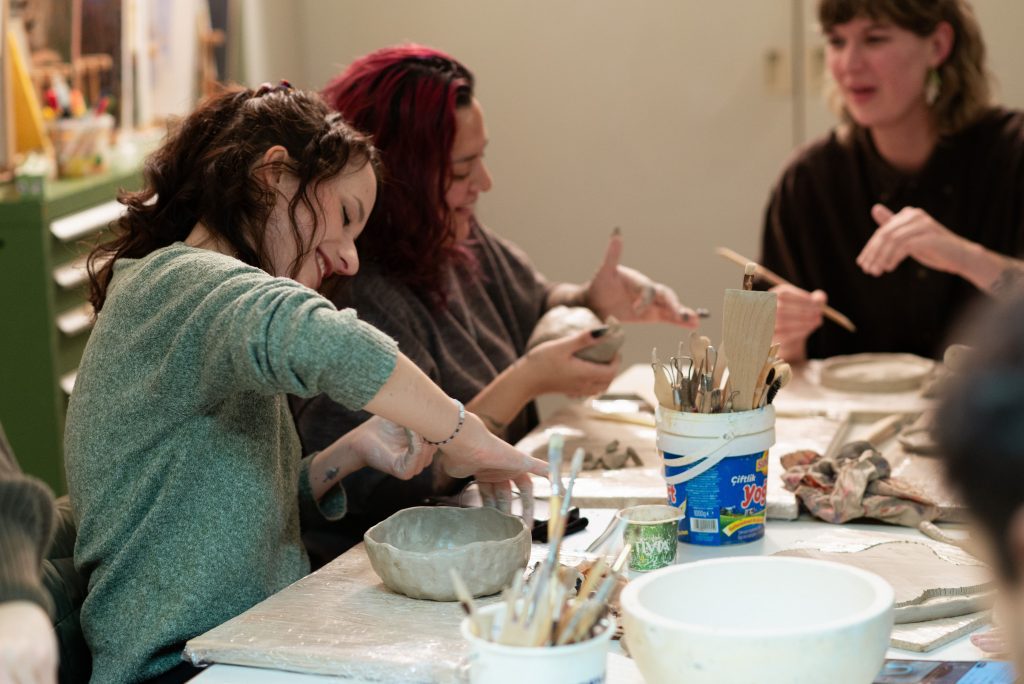
A group working with clay together at a pottery workshop table

About ForEveryone

Berlin might be known for its fast pace and transient spirit – but behind every cafe door, studio, and park bench, there’s potential for real connection. Offline communities remind us that we belong, not because of algorithms, but because we show up.


At ForEveryone, we believe that connection grows through creativity and presence. Every workshop, every shared cup of tea, every story told – it all adds up to something bigger: a community where everyone feels they belong.

We all know that communities are important for our lives, both mentally and physically. Gathering with a group of people to practice something common or just simply talk can be very beneficial and important for this feeling of belonging. We see a rise in online community gathering the last years, especially during and after Covid. From work meetings and workshops to friendly and family gatherings, screens became our window to the rest of the world.


This is why offline communities matter more than ever. When we gather in a workshop, share space or create something side by side, we rebuild a kind of connection that no video call can replace.

The importance of offline communities and connecting with other people


Human connection, apart from a nice addition to life, it’s a biological need. From the moment we’re born, our brains are wired for interaction, cooperation, and belonging. Psychologists and neuroscientists often describe connection as a form of nourishment for the mind, as essential as food or sleep. When we feel seen, heard and supported, our nervous system regulates, our stress decreases and our overall sense of wellbeing improves.

Beyond emotional comfort, connection shapes how we experience the world. Through others, we build meaning around our lives, share ideas and grow. Being part of a group, whether it’s a creative workshop, a volunteering team, or a local gathering, gives us a sense of identity and purpose. It reminds us that we are part of something larger than ourselves.

Research has shown that regular, face-to-face social interactions can reduce the risk of anxiety, depression and even certain physical illnesses. A long-term study by Harvard University found that the quality of our relationships is one of the strongest predictors of happiness and longevity, even more than wealth or career success. Simply put: meaningful connections help us live longer and feel better.


In today’s fast-paced, often digital world, these genuine human moments can feel rare. But creating and nurturing them through conversation, shared creativity, or collaboration, is one of the most powerful ways to strengthen both individual and collective wellbeing.

Common activities and mental health


Shared activities such as walking groups, community gardening, book clubs, or creative workshops offer opportunities for interaction and belonging in a low-pressure way.

Participating in common activities helps reduce feelings of loneliness and depression by giving structure to the week, promoting physical movement and providing a sense of purpose. Even small rituals – like chatting with a neighbour, joining a weekend cooking group or attending a local event – can create meaningful moments of connection that strengthen emotional resilience.

In Berlin, where many people live alone or move frequently, these shared activities can act as “anchors”, helping individuals feel part of something bigger. Whether it’s volunteering, joining a choir, or attending a neighborhood art workshop, collective participation nurtures both mental and social wellbeing.

How to create an offline community


Finding or creating a sense of belonging doesn’t always require big gestures – sometimes, it starts with a single message, a shared interest, or showing up somewhere new. Offline communities grow where people feel safe, seen, and valued. Here’s how you can find or build yours in Berlin (or anywhere):

  1. Start with shared interests

Look for activities you naturally enjoy – sports, music, art, gardening, journaling or volunteering. Local community centres, libraries, and NGOs often post open events and workshops. Berlin has a rich network of grassroots initiatives where you can meet people while contributing to something meaningful.

  1. Join local groups

Use platforms like Meetup, Nebenan.de, or Facebook Events to discover nearby groups. Whether it’s a language exchange, a film club, or a neighborhood clean-up, these spaces allow you to meet people with common interests offline.

  1. Volunteer

Volunteering is one of the most powerful ways to build community. It connects you to others with shared values and gives your time a collective purpose. Many Berlin NGOs – including us at ForEveryone 😊- host workshops and activities where participation can turn into friendship.

  1. Create your own

If you can’t find what you’re looking for, start small. A weekly dinner with neighbours, family or friends, an open photography walk or a “bring-your-own-book” afternoon in a park can grow organically into a supportive circle. Offline communities don’t need hundreds of people; they need small steps of consistency and care.

  1. Stay connected

Community building isn’t a one-time event – it’s a rhythm. Stay engaged, attend regularly, and check in with people you meet. The more you invest, the stronger the ties become.

Offline connection takes time, but it’s deeply rewarding. In a world where most interactions happen through screens, showing up in person (yes, even for just an hour) can restore a sense of belonging that technology can’t replicate.

About ForEveryone


Berlin might be known for its fast pace and transient spirit – but behind every cafe door, studio, and park bench, there’s potential for real connection. Offline communities remind us that we belong, not because of algorithms, but because we show up.


At ForEveryone, we believe that connection grows through creativity and presence. Every workshop, every shared cup of tea, every story told – it all adds up to something bigger: a community where everyone feels they belong.