



Human Rights Day
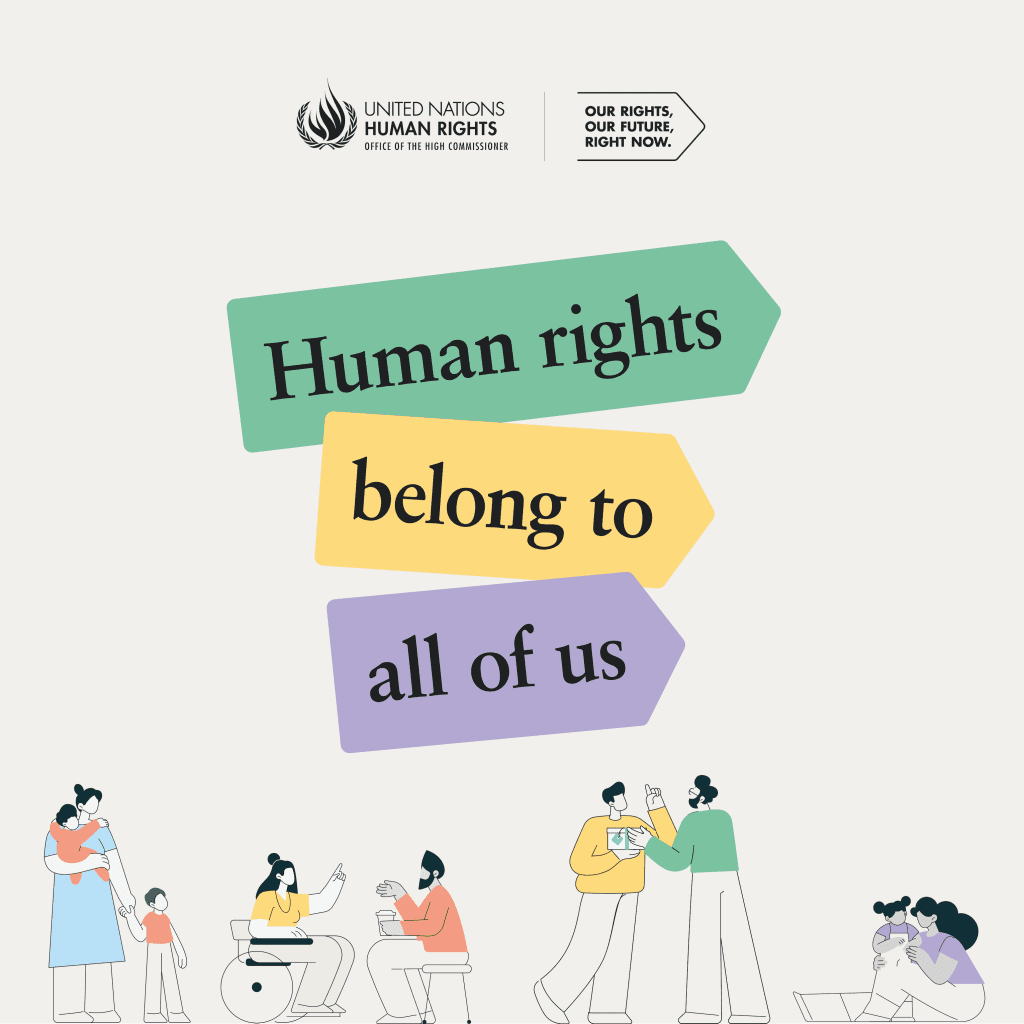
Our Rights, Our Future, Right Now
10.12.24 – Teya Pichsinee, Maria Plexida
How would we define Human Rights?

Human Rights are the fundamental principles that define how every person should be treated. Protected by both national and international law, they belong to everyone simply by virtue of being human regardless of nationality, ethnicity, religion, or socio-economic background.
These rights are universal and inalienable. They encompass a wide spectrum, including civil, political, economic, social, and cultural rights from the right to life and freedom of expression to protection from slavery and access to education.
The modern understanding of human rights emerged in the aftermath of World War II, as a response to the atrocities of the Holocaust. In 1948, the United Nations General Assembly adopted the Universal Declaration of Human Rights (UDHR), establishing a shared global framework to uphold dignity, freedom, and justice.
Since then, the UDHR has inspired numerous international treaties and national laws, shaping a collective commitment to protect human rights worldwide and reminding us all of our responsibility to defend them.
How was the Human Rights Day established?
Every year on December 10th, the world comes together to celebrate Human Rights Day, marking the adoption of the Universal Declaration of Human Rights (UDHR) by the United Nations General Assembly in 1948.
This landmark document continues to empower individuals and communities worldwide. Its principles remain as relevant today as they were then, reminding us of the importance of protecting and advocating for human rights in our everyday lives.
By standing up for our own rights and those of others we help foster equality, dignity, and solidarity across societies. Every action we take, no matter how small, contributes to strengthening our shared humanity.
UNESCO was the first United Nations agency to place the UDHR at the heart of its mission in December 1948. Since then, through education, science, and media, it has played a key role in promoting human rights values across the globe.
A Historic Moment in Human Rights
The adoption of the Universal Declaration of Human Rights (UDHR) marked a defining moment in history. In the aftermath of the devastation of World War II, the international community came together with a shared commitment: to ensure that such atrocities would never happen again.
Drafted by representatives from diverse legal, cultural, and religious backgrounds, the UDHR sets out 30 articles that protect the fundamental rights and freedoms of every individual. Among these are:
- The right to life, liberty, and security
- Freedom of expression, religion, and thought
- Equal access to education and employment opportunities
- Protection from discrimination, torture, and slavery
With over 500 translations, the UDHR remains one of the most influential and widely recognized documents in history a powerful, universal statement of humanity’s commitment to dignity, equality, and justice.
The Ongoing Fight for Human Rights
Even though there has been an improvement in the situation since 1948, human rights challenges are still very real. From issues of inequality, poverty, and lack of freedom of speech to the rise of authoritarianism, universal rights are far from being achieved. Human Rights Day reminds us of the endeavors by governments, organizations, and individuals in the quest for equality and freedom.
This day is also a call to action to all, to stand up for the rights of others, to challenge injustices, and to further a culture of respect and understanding. It’s a time to reflect on how far we have come and how much more we have to achieve.
Why It Matters
Human Rights Day is not just about celebrating a historic document; it’s about reaffirming the values of dignity, equality, and freedom. It’s a reminder that are the cornerstone of peaceful, just, and inclusive societies. By standing up for human rights, we help ensure a better future for generations to come.
As December 10th approaches, let us remember the importance of protecting these rights and recommit to creating a world where every individual’s dignity is upheld. After all, the fight for human rights is a fight for humanity itself.
 Credit by: www.ohchr.org
Theme: Our Rights, Our Future, Right Now
This Human Rights Day highlights the role of them as a solution — a preventive, protective, and transformative force for good. As UN Secretary-General António Guterres has stated, “Human rights are the foundation for peaceful, just, and inclusive societies.”
This year’s theme emphasizes the importance of human rights in our everyday lives. It is a call to action to challenge hate speech, address misinformation, and counter disinformation. Now is the time to reignite a global movement showing how they can make a tangible difference in addressing global challenges.
Under the campaign Our Rights, Our Future, Right Now, the UN spotlight the real-world impact by focusing on pressing global issues, celebrating successes, and highlighting practical solutions. This effort builds on the forward-thinking vision outlined by UN Human Rights Chief Volker Türk: A Path for Solutions. Presented as the culmination of Human Rights 75, it commemorates the 75th anniversary of the Universal Declaration of Human Rights.

Credit by: www.ohchr.org
Let us know how we can encourage this world better.
Let’s make this world better together! 🙂
Subscribe to